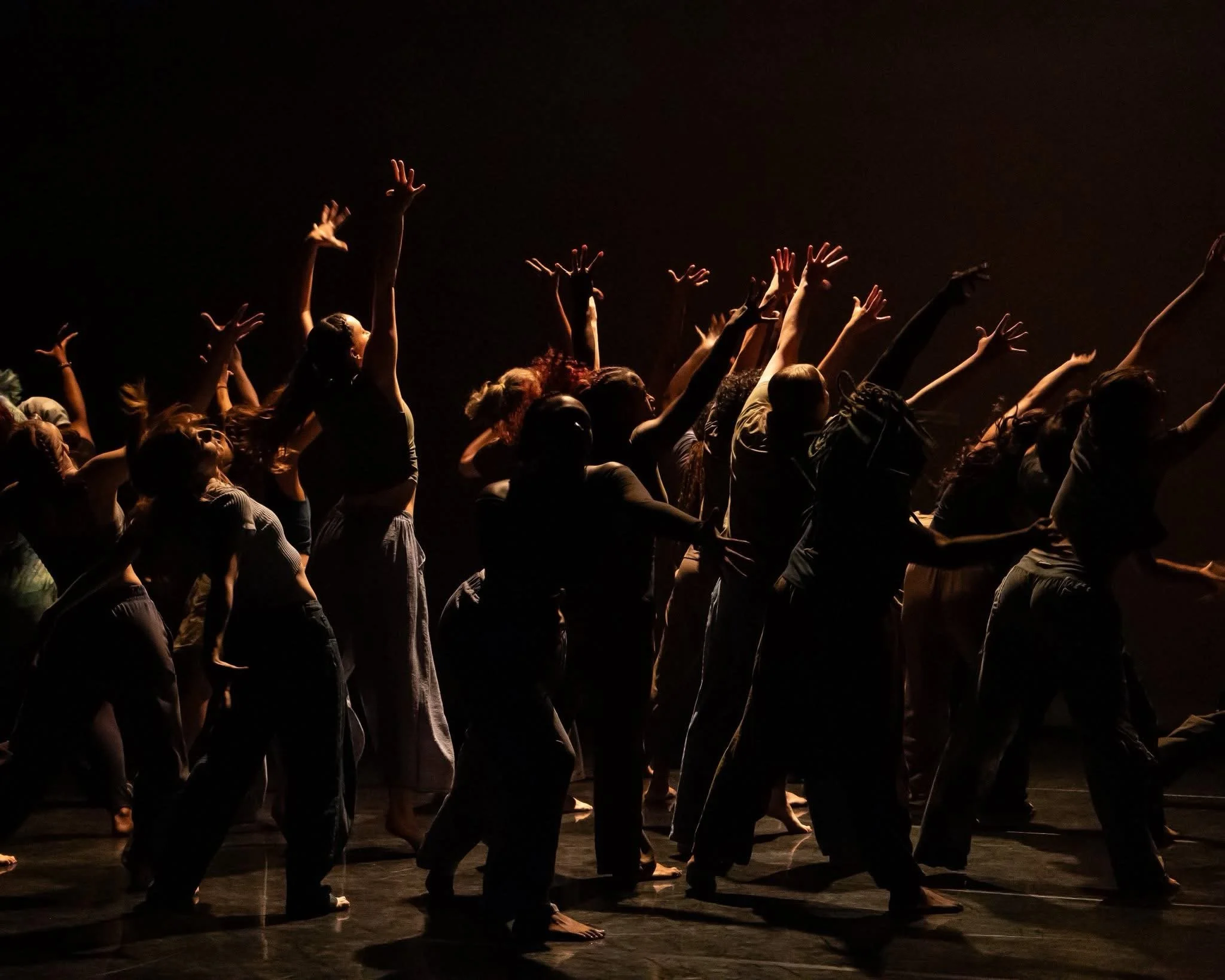
Artistic Director Meredith Sutton sat down with Bevara Anderson-Selkridge to talk about Essence and BĀLA Dance Project’s first standalone concert in Chicago as part of Season 53 of the Dance Presenting Series.
Meredith Sutton: Essence brings together a wide range of movement practices: Umfundalai (pronounced Ma Foon Dah Lah), House, and your Modern background influences. What does it mean to you to bring these different practices into conversation within this body of work?
Bevara Anderson-Selkridge: There's a part of me right now that is desiring to bridge the gap in personal life experiences. Specifically for Black people, we're living in these two realms where you want to enjoy life but you're also grieving everything that's happening in the world. Feeling different movement systems connect in my body feels like a way to do that physically and in motion. I'm not sure if that's a romanticized way of experiencing it, but it is a way to continue living and thriving. I can do it literally within my body and see that with my dancers, so it feels really special.
Meredith: What are the main movement motifs, whether its movement based, energetic, or thematic, that you see emerging?
Bevara: The first motif is a movement in the Umfundalai canon called “The Undressing”, the next is having something to say, and the last is a staring down—the performer demanding from the audience: see me, right now, in a non-aggressive way. This comes up in several of the pieces.
Meredith: In the way you’re describing it, there’s an audaciousness or a bold dedication to demanding the acknowledgement of presence.
Bevara: Yes, I want the audience to be aware that you are here to see me in my Blackness and in my fullness. You’re watching or listening to the conversations that we're having and you need to be aware that we're letting you into that. In terms of the movement, in “The Undressing” the arms come over the head, past the shoulders, and present out in front. The way I teach this movement in class focuses on the experience of Black women in America. There’s this constant feeling of undressing. For example, I need to undress myself in the way that I show up in a space to make others feel comfortable or to make room for other people’s needs. It’s like both bearing and giving through this one moment of the arms. It shows meaning differently in multiple pieces. It is a surrender in come out with your hands up. In Residue at the end of the show “The Undressing” is confident in that it shows the dancers are giving you all they’ve got. It is my favorite thing to do in class. Whenever I tell my students that we’re about to do “The Undressing”, I always get a big exhale because they know that we're going to sit in it for a while. It’s tough. It's a hard thing to do and it doesn't look like it. It’s deceiving. That’s another part of in how Black women can make things look simple. How it really feels is something much deeper and I think it's so beautiful.
Meredith: It is our experiential iceberg. There's only a portion that is visible but there's so much substance, formation, and anchoring required for that tip to be formed and apparent. Speaking of the Umfundalai cannon let's talk about Dr. Kariamu Welsh and you being part of the final generation of dancers to train with her. How does her influence live within Essence and how do you feel yourself pushing that lineage forward through this this offering?
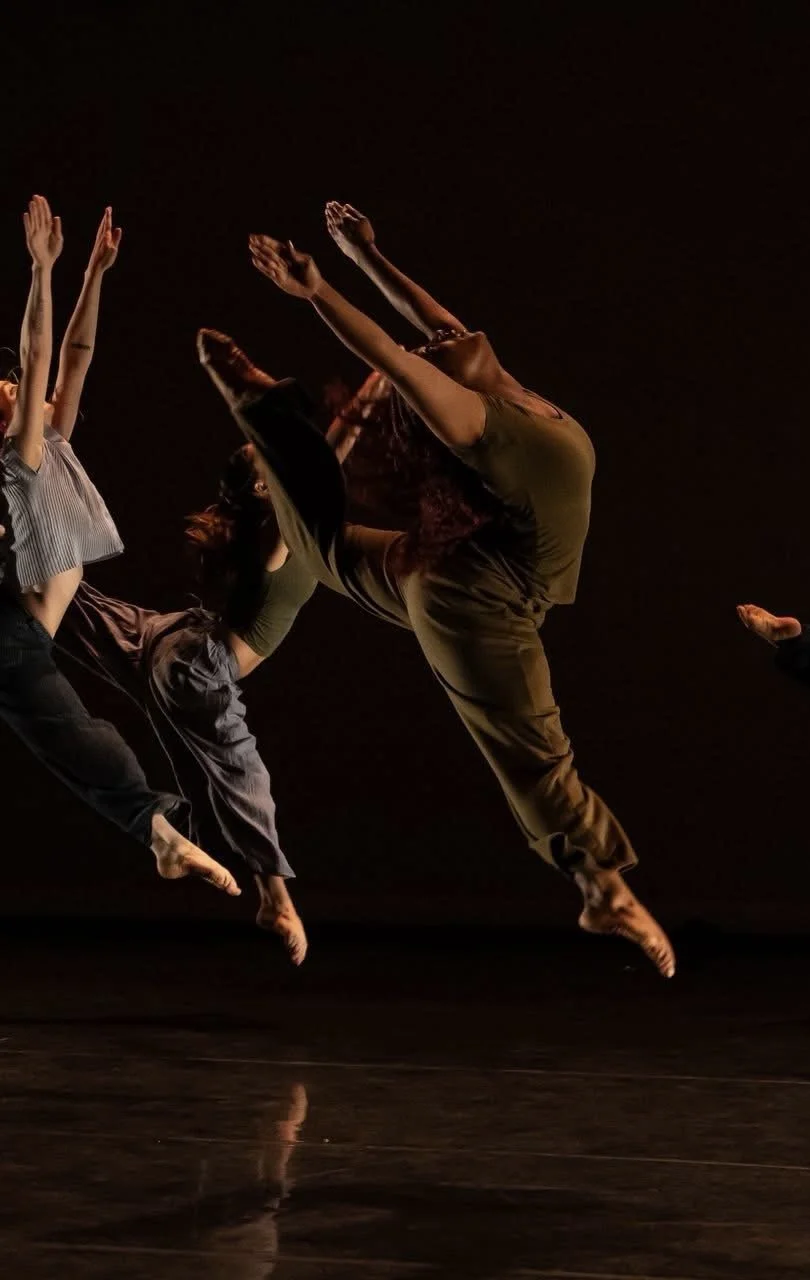
photo by: William Frederking.
Bevara: Umfundalai actually means “essence” in Kiswahili. I chose the title to be direct about where I'm paying homage. Since Mama K's transition [in 2021], we're learning what it looks like to continue to move forward. Many of the teachers had been dancing with her and became teachers later, whereas I studied with Mama K and am part of the generation of teachers that are coming up right now in our late 20s or early 30s. We have this hunger to look forward. This concert is my way of doing that and figuring out what it means to hold something and preserve it while also allowing myself to see how that grows and evolves. Essence feels like a thank you and a deep dọbalẹ to Mama K for giving me such a special movement system and language system to communicate through. Dancing Umfundalai is like home and it feels like I've returned somewhere familiar. Now, when watching my students learning and making their own connection to Umfundalai, it feels like I'm seeing the form through them as well.
Meredith: This is your first standalone concert in Chicago of your company BĀLA Dance Project – how are you feeling?
Bevara: Being pregnant right now, it feels like so much is happening. I'm affirming this space. Performing on stage while growing a little human and knowing that this is going to be their home is exciting. It’s crazy, as I think of it, I'd never been to Chicago before I moved here. I took the position at Columbia and I came here sight unseen. My “let’s do this” attitude has worked out in my life. I'm blessed and covered. Excitement really sums up how I’m feeling. I'm excited about forward motion, continuing to make work and being in rehearsal up until the show. I'm excited for people to see what I have to say. I'm excited to look back on this and tell my baby, “You were in my belly when I was doing this!”
Meredith: Your work has been described as revolution and resistance. What are some of the ideas, histories or questions that you feel most compelled to resist, reclaim, or reimagine through your choreography?
Bevara: The order of the show speaks to this. The opening, In Every Lifetime, Cover Me, feels like a reclamation that is sacred, not demonic or scary, acknowledging coverage by and knowledge from ancestors. A reclamation of self first before moving into resistance of government and the current administration in come out with your hands up. I need to understand the cultural moment and past histories before I move forward. The duet that follows, So Two Black Women Walk Into A Bar and…, responds to what’s heavy, grief and sorrow. But we are still existing and thriving even if we are exhausted by what we carry. To live and continue to thrive is also a form of resistance. The piece after intermission, She Always Had Something to Say, reminds the audience of what has been articulated and that you can't take it back—it's out there in the ether. Hold it. Stay in the discomfort and see how you respond. Mourning by Morning: A Family Ritual feels like reclamation again by turning back to home and returning to family and community. Asé, my solo, feels like a culmination of all those things and I express the resisting, fighting, and holding the grief. The concert ends with Residue of a Thing, very much a “But Still I Rise” moment. We are here and in the residue of everything. This piece takes it to the absolute extreme and at the end, everything falls back down but the residue is always going to be there. It's always going to linger. All that energy that you just felt, even when the dance is over, and everybody leaves the stage, that residue will remain. Our greatness, no matter how much they try to erase us, is going to exist.
Meredith: Some of your cast members are deeply embedded within the Dance Center community and many current dance majors and alumni are taking part in this performance offering. Please speak on how it has been to blend those casts.
Bevara: There are 28 dancers in the show that make up these three layers: Columbia students that I have right now, recent Columbia graduates, and students that I had in grad school that are now my company members. It's been interesting seeing how I've changed as an educator through the way that they're moving through material. I can see how they call on one another when they're having a difficult time or they're struggling with something. The people who have worked with me longest need help from the current students to brush up on certain movements. The newer dancers seek direction from seasoned cast members. Watching them lean on each other and communicate doesn't seem like they're these different groups of people. They came in the studio and they're just dancing together which I think has been the most special to witness. When you're bringing different communities together, sometimes you're worried that they'll stay in their pockets, but the joy and rigor of the work has really connected them. When we rehearsed Residue I let them know that I wanted to do two runs back-to-back, but if the first one is good, we'll just leave it. The first run wasn’t the best and they didn't even turn to me. They just started setting up to do it again and they were so ready and eager to do it again. Even though it's a tough dance and it's a long piece, that second round was beautiful. It was stunning. They work hard and they put all of themselves into the work. They're bearing it all and they're really committed. I couldn't ask for more.
Meredith: Let it not go unnoticed, Bevara, that you’re channeling something very specific. Through the content and historical context and current relevance of the things that you're addressing, this is a way that we can collectively speak to and experience the now. It's warming to hear how the cast is meeting you in this moment. My final question is for audiences encountering Essence, what do you hope that they feel, question, or carry with them when they leave the theater?
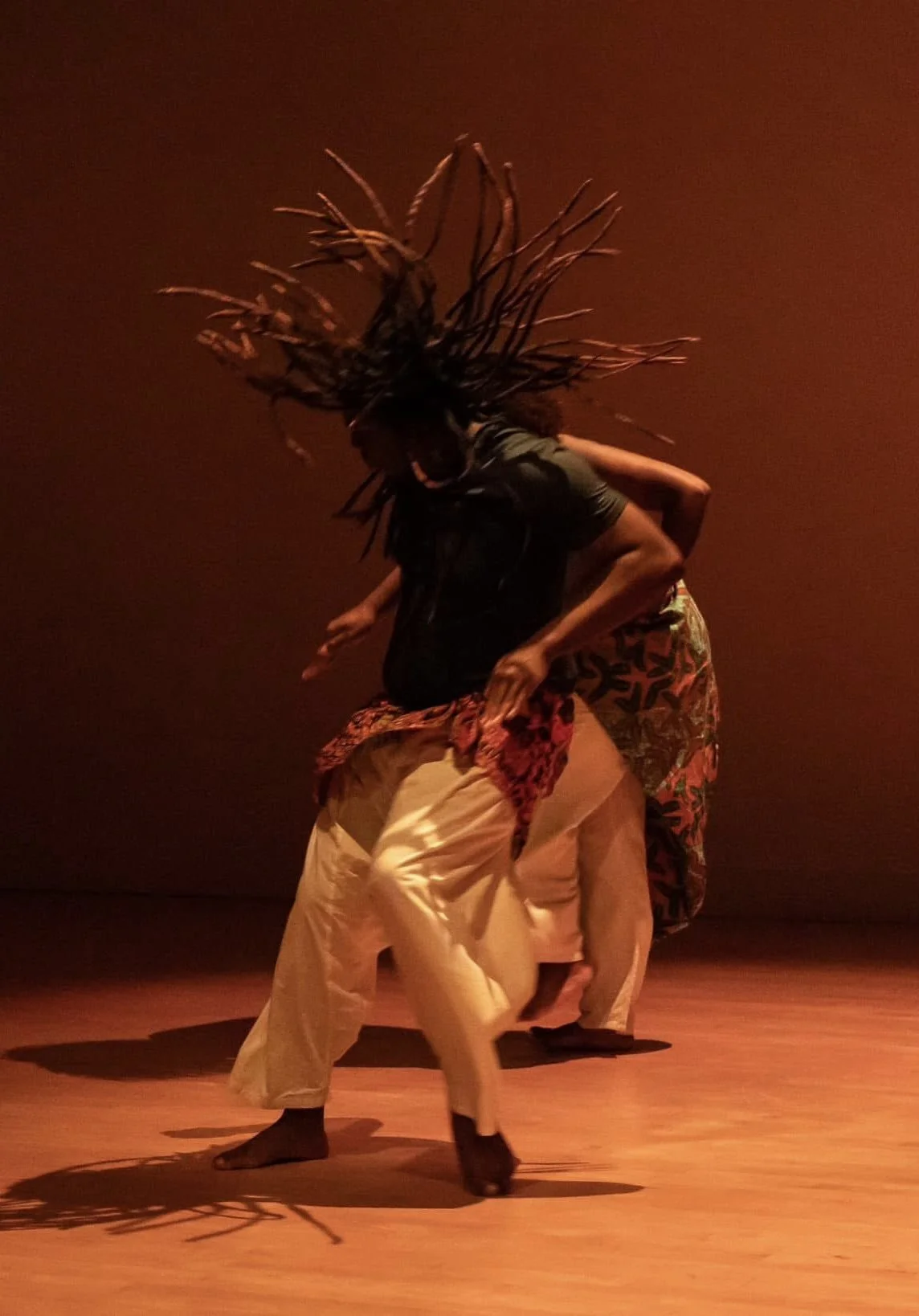
Bevara: I hope that they feel honesty in the work and what the dancers are experiencing on stage as genuine. The dancers are opening their heart space to perform this. In the joyous works and even the sorrowful and heavy works, the audience should feel like they can be honest with themselves and the people around them. I also want the audience to see the Black folk around them. As Black people we often have to shift based on how people decide to see us. See me for who I am right now. That starts with seeing the person in front of you. In all relationships I can't understand what you're saying until I see you for who you are first. Nothing's going change in in this country until we really start seeing people for who they are and truly I think that starts with seeing Black people. Once we can open ourselves to that, we can truly start seeing other people as well.
Meredith: These concerts are an experiential and collective biography of what this journey has been for you and your cast. The beauty and the tumultuous portions reveal this constant pushing towards resilience and connection to joy as resistance. It’s truly a balm of acknowledgement and an acceptance of responsibility to keep moving forward. Thank you.
Banner image: photo by William Frederking.
