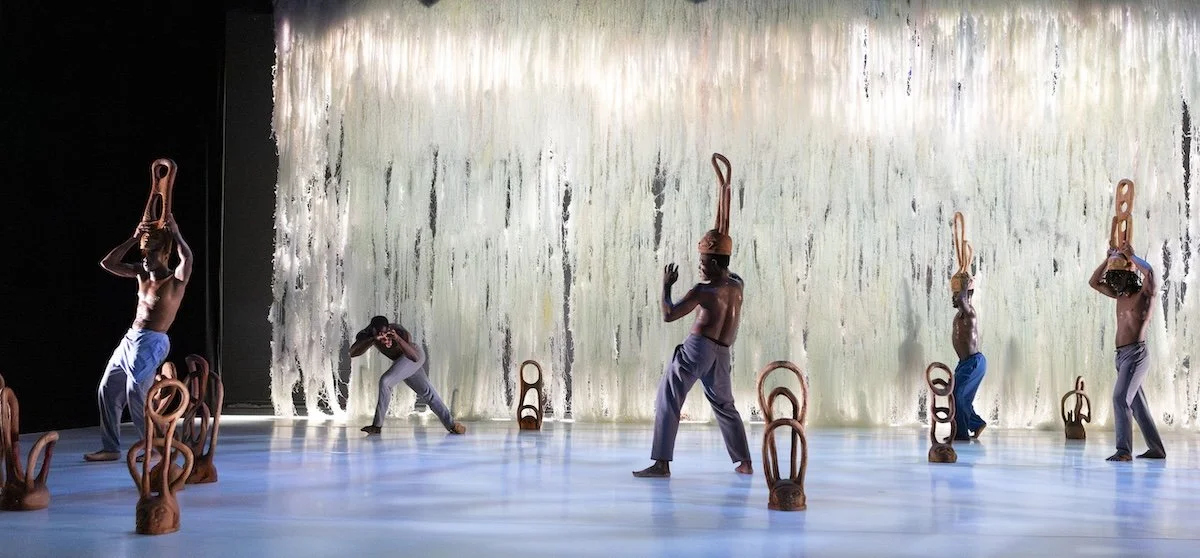
Didę by Compagnie Multicorps, a celebration of body and spirit in tribute to Ìyá Nlá, the Yoruba deity of creation, deities, and all of life, was performed last weekend. Ìyá Nlá is the great mother, and didę means "rise up." I have attended many dance performances in Chicago, but Didę was different from the moment we entered the space at Columbia College Dance Center. The program was choreographed by Marcel Gbeffa from Benin, with direction and wood masks designed by Sarah Trouche from France
Everything about the evening had a sacred gravitas, including the way the audience was asked to enter the performance space. We were put in a single line and directed upstage behind the dance floor. We filed past a gorgeous white backdrop lit with a blue color gel. It looked like a surreal Spanish moss. Four of the dancers stood on the stage in silence, not making eye contact, and a single Gelede mask hung from the rafters as an homage to Ìyá Nlá. As we took our seats, it occurred to me that our entrance was done as a sign of respect, and this was more than just a performance…
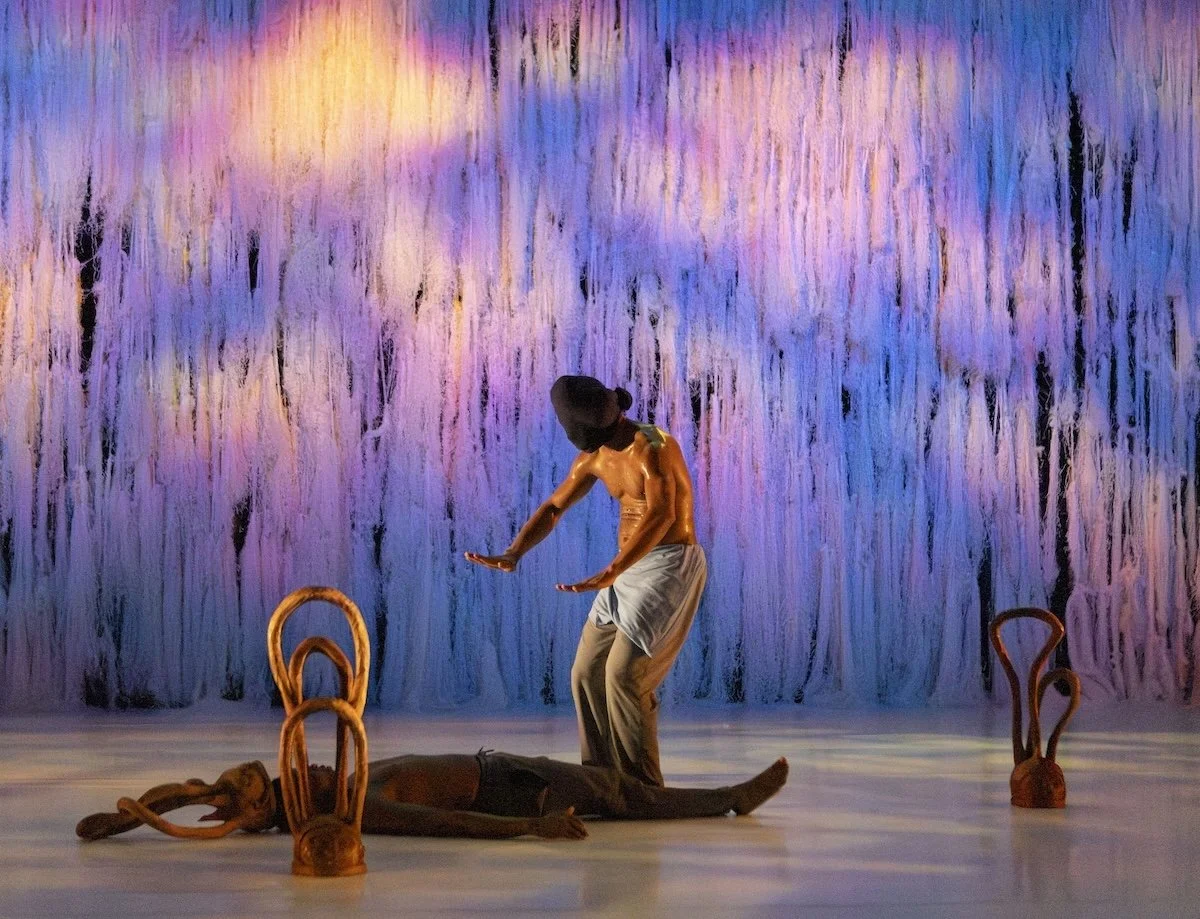
Didę, photography by William Frederking.
“this was a sacred ritual, performed as a work of art. The audience was clapping and shouting at a stage filled with masks. Perhaps it was meant that we give that adulation and applause to Ìyá Nlá. I do not know for sure, but it was a dazzling performance that also felt like a blessing”
…Didę showed the roots of capoeira in its fluidity, with dancers physically connected in circles or carrying one another. After the opening movements, a fifth dancer entered wearing one of the masks that would be displayed in the performance. A shirt covered his face, and the mask representing the Mother deity remained on his head. In some traditions, such as Voudun, participants are overtaken by the deity, who uses them as a horse in a form of possession. Some of the same elements were in Didę. The singular mask is set spinning as each dancer catches it while it continues to spin. The four dancers fell under a spell. They were repeatedly knocked down and finally lined up on the floor, submitting to the will of the deity. One of the dancers spun in a circle as if in a trance, like a Sufi whirling dervish. He became like the single mask suspended from the ceiling…
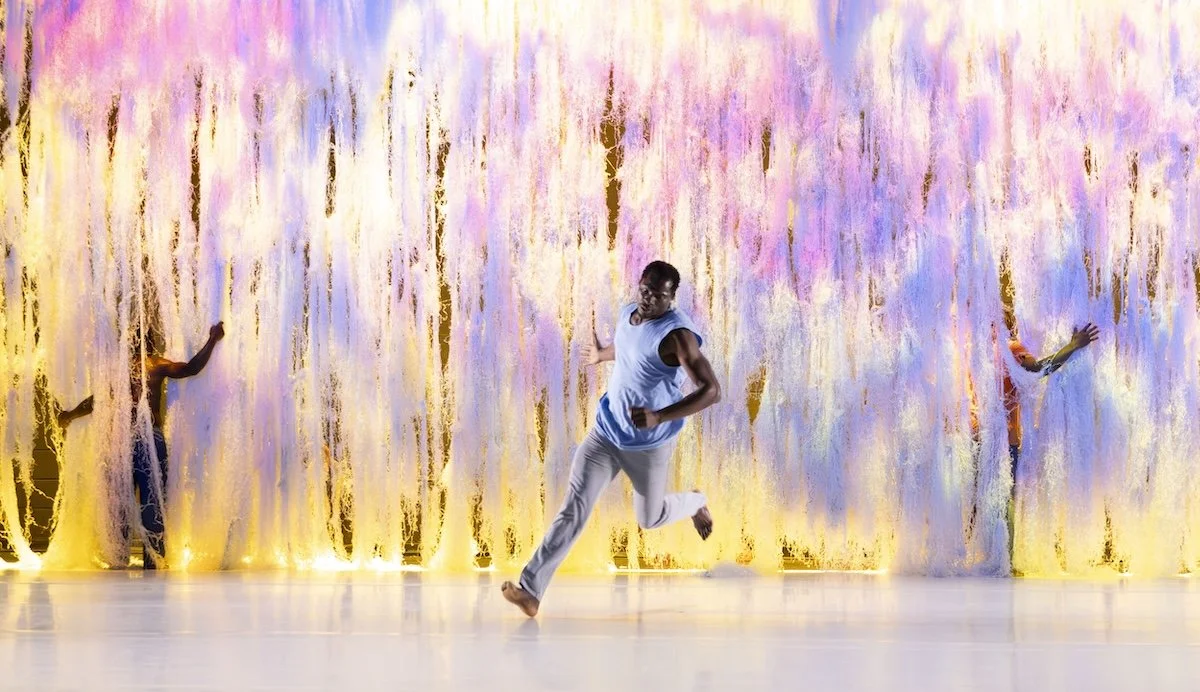
Didę, photography by William Frederking.
…The technical aspects created the ambiance of a spiritual gathering. Ivan Matis's lighting design painted the scenery and the dancers with hues that seemed to etch the dancers' muscles. It gave the backdrop a brilliance, almost like an old-school black light poster. Shivakao's costumes were deceptively simple. They looked like everyday casual attire, but they also accentuated the movements and the body forms. The hypnotic and sensuous music was composed by Viktor Benev. Choreographer Marcel Gbeffa performed his creation with Orphée Georgah Ahéhéhinnou, Bonaventure Sossou, Yetchennou Horace, and Joseph Gbeffa…
…As I said earlier, this was a sacred ritual, performed as a work of art. The audience was clapping and shouting at a stage filled with masks. Perhaps it was meant that we give that adulation and applause to Ìyá Nlá. I do not know for sure, but it was a dazzling performance that also felt like a blessing.…Didę is in my top five favorites of the dance season.
Banner image: Compagnie Multicorps in Didę, photography by William Frederking.
