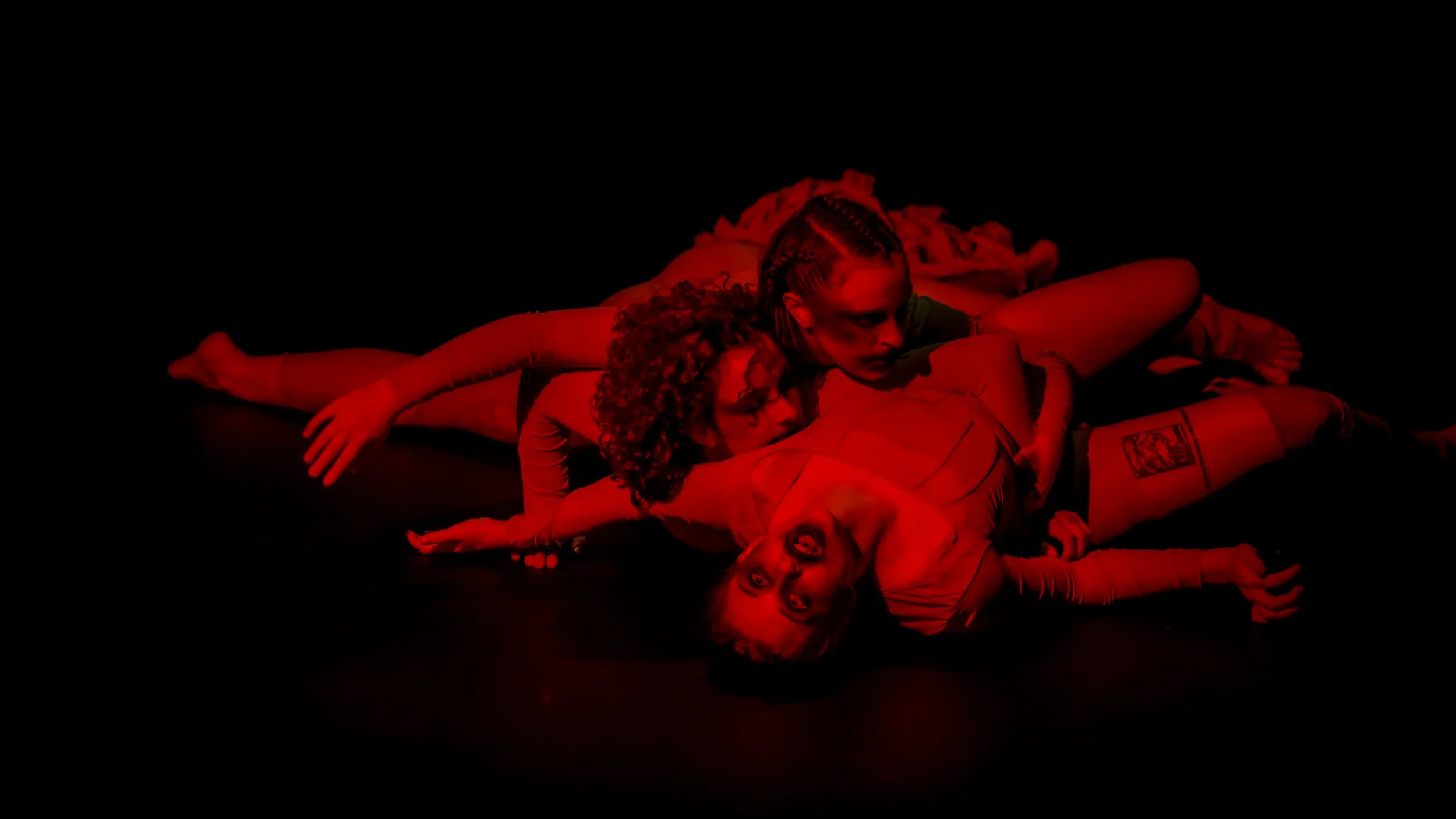
Artistic Director Meredith Sutton sat down with INSÉKTA (Camila Rivero Pooley) to talk about the world premiere of MATADORA opening Season 53 of the Dance Presenting Series on September 24-26, 2026.
A continuación, se presenta una versión en español de su conversación. (Spanish language translation by: Areli Ramirez.)
Meredith: Let's start with the title MATADORA and how that served as a point of entry for you.
INSÉKTA: This work started with understanding my personal journey with suppressed rage. As a Latinx person, born in Lima [Peru] and raised in Caracas, Venezuela, and then moving around here and there in the U.S., I realized that there were no avenues of going through these emotions without being demonized or judged or rejected or isolated in society. I found this common not only in my family, but also outside. So what if I just create a new archetype, make one for myself, and hopefully other people will resonate with it? When I say archetype, I mean different frameworks of being and thinking about oneself in the world. That came to be MATADORA. MATADORA basically means a “she killer,” but for me, it felt like it could be this divine energy that people could access and conquer their rage, their traumas, and come anew to the world, accepting their complexity. MATADORA is a warrior, but it's like: the only way out is in. I'm just going to go courageously even though I have fear, you know?
Meredith: When you talk about this suppressed rage and how that really underscores MATADORA, it seems this is not something debilitating, but rather a source of power. How are you using that as a source to devise?
INSÉKTA: First and foremost, I have to start with myself and my experience. I have been in a process of understanding my rage for the past five years and how it feels in the body. And as an artist, I need to understand it and physicalize it. So I started alone basically with myself, like how does rage look in the body? If I were to actually draw rage, like sketch it on a paper, how does it transform the body? That ended up being incredibly interesting because movements were moving in the realm of distortion and aggression. I went back to some physical theater principles and found that the bufón archetype is the best way to tell the story. Historically, the bufón was the joker of the king, not a god, nor a demon. The bufón lives in the in-between world, and because of that, the bufón is able to denounce, criticize, mock, and make fun of society without getting into trouble. Literally, because it's not a person or a demon or nothing. And I found similarities with my womanhood and my queerness with the character of the bufón. When I was in Lima, I studied with the physical theater company [Compañia de Teatro Físico] that came to present Los Regalos [at the Dance Center in June 2026 presented by Physical Theater Festival Chicago]. They introduced me to el bufón and that changed my world because I was looking for tools to tell stories on stage. So I went into a more theatrical mode of working and devising. Now I have these dancers—I'm not asking to put your personal history in this, because that's too much, but what about if we create archetypes that grab from what you have seen outside in the world to represent them back? That is way more accessible. And maybe they can find themselves in those archetypes like I found myself in all the archetypes that the dancers have made.
Meredith: When thinking about this and your return to the Dance Center as an alum, what does that mean to you to bring this back to the place where you have developed as an artist?
INSÉKTA: It's beautiful, honestly. I remember dreaming when I was a student to come back as an artist and present work. I was at Columbia from 2013 to 2018, and the [Dance] Presenting Series was something that radically shifted my perception of literally what dance can be, what you can put on stage. I can think specifically of Cloud Gate [Dance Theatre of Taiwan]. Cloud Gate was one of the biggest ones that really shifted my mind because they're not from this continent, they're from Asia, and they use their own tools and their own culture to make work, to speak about their experience. And we are humans and humanity will share the same feelings, but we have different ways to interpret them. For me, that was radical. Another class that I loved was Colleen Halloran’s. We played with camera work and sound. And, wow, I can integrate all these elements to create a new world! I can see Cami in their 20s being super happy that I'm coming back as an artist and the fact that it is happening feels like, damn, all of the choices that I made actually were worth it.
Meredith: How have you changed from the student that once traversed the halls and studios and stairwells of the Dance Center?
INSÉKTA: I was sleeping in the hallways because I was there from 9:00 a.m. to 10:00 p.m., literally every day. It felt like a home and coming back; it still feels like home. To be honest, I never thought I could study dance. The only thing that was possible, at least in Caracas, was the ballet academy. I knew that since I was 10, I was like, I don't want to do ballet. So it was here in Chicago, actually, where I decided to dance. I came in first as a marketing major with a music producing minor because I wanted to do events like Lollapalooza. Being here made me realize that this is my life and I'm going to live with this choice, so I'd rather make it mine. So I took the chance on the Dance Center to be my avenue of education. And I do not regret it. I was able to explore ballet, modern, West African, hip hop, critical thinking, improvisation. The diversity offered in the curriculum was life changing and that gave me permission to keep doing that outside. My mindset was: college is a rehearsal for life after college. I took it very seriously. It truly feels like a full circle from taking the chance, to believing that I can be an artist, to studying art, which is unheard of. I'm the first artist in my family.
Meredith: Thinking about MATADORA and it being presented as part of Destinos Festival and amplifying Latine voices and stories. What does it mean to you to have this work enter a larger conversation about that history, about that artistry, about that cultural belonging?
INSÉKTA: When I was in college, Latine art was not a thing. And then Bad Bunny happens and we are the center stage. It feels amazing that we finally get to share a platform next to other ethnicities and races. I don't do traditional Latin art and that is really hard for people to understand sometimes, but it's part of my heritage. It's part of my culture. It's embedded in everything that I do. Like rhythm is a huge part and you're going to see that in the piece. Because timing and rhythm for me is everything because I grew up with that. And I think Latinos, Latinas, Latinx people, we have to stop hiding ourselves. Because our culture is amazing. It's polycultural. And we have the right to be in the center stage, too. We don't have to be in the background. We don't have to be apologizing for things. We don't have to be double questioning the ways we see the world. We don't have to imitate American forms to be validated. We can be ourselves because it's part of this world. And we can open new avenues of thought and frameworks to help society to become better. I believe that every culture has its epiphanies and eureka moments that could completely help form new societies. I'm incredibly grateful and grateful to myself and also the people that believed in me, because it is important that there are new narratives out in the world.
Meredith: What do you hope audiences feel or carry with them after encountering MATADORA?
INSÉKTA: I hope they give themselves the permission to go into the dark night of their soul and come out anew. I hope my piece allows them to do that. To be a companion in that journey.
La Directora Artística Meredith Sutton se reunió con INSÉKTA (Camila Rivero Pooley) sobre el estreno mundial de MATADORA, como parte de la Temporada 53 del Dance Presenting Series, los días 24, 25 y 26 de septiembre de 2026.
Meredith: Empecemos con el título MATADORA y cómo sirvió de punto de partida para ti
INSÉKTA: Esta obra nació al comprender mi propio proceso personal con la ira reprimida. Como persona latinx —nacida en Lima (Perú), criada en Caracas (Venezuela) y tras haber vivido en distintos lugares de Estados Unidos—, me di cuenta de que no existían vías para canalizar estas emociones sin ser demonizada, juzgada, rechazada o aislada por la sociedad. Observé que esto ocurría tanto en mi familia como en el entorno externo. Entonces pensé: ¿y si creo un nuevo arquetipo, uno para mí misma, con la esperanza de que otras personas se identifiquen con él?
Cuando hablo de arquetipo, me refiero a diferentes formas de ser y de concebirse a una misma en el mundo. Así surgió MATADORA. Aunque MATADORA significa literalmente «matadora» (una mujer que mata), para mí representaba una energía divina a la que las personas podían acceder para vencer su ira y sus traumas, y así renacer ante el mundo aceptando su propia complejidad. MATADORA es una guerrera, pero bajo la premisa de que la única salida es hacia el interior. Es avanzar con valentía, aun sintiendo miedo, ¿sabes?
Meredith: Cuando hablas de esa rabia reprimida y de cómo realmente subyace en MATADORA, parece que no es algo paralizante, sino más bien una fuente de poder. ¿Cómo utilizas eso como recurso para la creación escénica?
INSÉKTA: Ante todo, debo empezar por mí misma y por mi propia experiencia. Llevo cinco años tratando de comprender mi rabia y cómo se manifiesta en el cuerpo. Como artista, necesito entenderla y llevarla al plano físico. Así que empecé sola, planteándome preguntas: ¿qué aspecto tiene la rabia en el cuerpo? Si tuviera que dibujarla —hacer un boceto en papel—, ¿cómo transformaría el cuerpo? El resultado fue fascinante, ya que los movimientos se situaban en el terreno de la distorsión y la agresividad. Retomé algunos principios del teatro físico y descubrí que el arquetipo del bufón es la mejor manera de contar esta historia. Históricamente, el bufón era el bufón del rey; no era ni un dios ni un demonio. Habita en un mundo intermedio y, gracias a ello, puede denunciar, criticar y burlarse de la sociedad sin meterse en problemas. Literalmente, porque no es ni una persona ni un demonio, ni nada por el estilo. Encontré similitudes entre el personaje del bufón y mi propia identidad como mujer y persona queer. Cuando estaba en Lima, estudié con la compañía de teatro físico que vino a presentar Los Regalos [en el Dance Center en junio de 2026, bajo el auspicio del Physical Theater Festival Chicago]. Ellos me introdujeron en la figura del bufón, lo cual cambió mi mundo, ya que yo buscaba herramientas para narrarhistorias sobre el escenario. Así fue como adopté un enfoque más teatral para el trabajo y la creación. Ahora cuento con estos bailarines; no les pido que vuelquen su historia personal en la obra —porque eso sería demasiado—, sino que creemos arquetipos basados en lo que han observado en el mundo exterior para luego representarlos. Es un enfoque mucho más accesible. Quizás ellos logren verse reflejados en esos arquetipos, tal como yo me vi reflejada en todos los arquetipos que han creado los bailarines.
Meredith: Al reflexionar sobre esto y sobre tu regreso al Dance Center como exalumna, ¿qué significa para ti traer este trabajo de vuelta al lugar donde te formaste como artista?
INSÉKTA: Es algo hermoso, sinceramente. Recuerdo que, cuando era estudiante, soñaba con volver como artista y presentar mi obra. Estuve en Columbia entre 2013 y 2018, y la serie de presentaciones de danza (Dance Presenting Series) cambió radicalmente mi percepción de lo que puede ser la danza, de lo que se puede llevar al escenario. Pienso concretamente en Cloud Gate [Dance Theatre of Taiwan]. Cloud Gate fue una de las compañías que más transformaron mi mentalidad, ya que no proviene de este continente, sino de Asia, y utiliza sus propias herramientas y su cultura para crear obras y expresar sus vivencias. Todos somos humanos y compartimos sentimientos similares, pero tenemos formas distintas de interpretarlos. Para mí, eso fue revolucionario. Otra clase que me encantó fue la de Colleen Halloran; experimentábamos con el manejo de cámaras y el sonido. ¡Y pensaba: "Guau, puedo integrar todos estos elementos para crear un mundo nuevo"! Me imagino a la Cami de veintitantos años, feliz de saber que vuelvo como artista; el hecho de que esto esté sucediendo me hace pensar: "Vaya, todas las decisiones que tomé realmente valieron la pena".
Meredith: ¿Cómo has cambiado desde aquella época en la que recorrías los pasillos, los estudios y las escaleras del Dance Center?
INSÉKTA: Llegaba a dormir en los pasillos porque pasaba allí el día entero, de 9 de la mañana a 10 de la noche, literalmente a diario. Aquello se sentía como un hogar, y al volver, sigo sintiendo lo mismo. Para ser sincera, nunca pensé que podría estudiar danza. La única opción posible, al menos en Caracas, era la academia de ballet. Lo supo desde los 10 años: yo no quería hacer ballet. Así que fue aquí, en Chicago, donde realmente decidí dedicarme a la danza. Al principio, entré para estudiar mercadotecnia con una especialización secundaria en producción musical, porque quería organizar eventos como Lollapalooza. Estar aquí me hizo comprender que esta es mi vida y que voy a convivir con esta elección, así que preferí hacerla realmente mía. Por eso aposté por el Dance Center como mi vía de formación. Y no me arrepiento. Pude explorar elballet, la danza moderna, la danza de África occidental, el hip hop, el pensamiento crítico y la improvisación. La diversidad del plan de estudios marcó un antes y un después en mi vida y me dio la libertad de seguir explorando todo eso fuera de las aulas. Mi mentalidad era que la universidad era un ensayo para la vida posterior a los estudios; me lo tomé muy en serio. Realmente siento que he cerrado un círculo completo: desde aquel momento en que me arriesgué y creí que podía ser artista, hasta llegar a estudiar arte, algo insólito en mi caso. Soy el primer artista de mi familia.
Meredith: Pienso en MATADORA, en su presentación como parte del Festival Destinos y en cómo amplifica las voces e historias latinas. ¿Qué significa para ti que esta obra se integre en una conversación más amplia sobre esa historia, ese arte y esa pertenencia cultural?
INSÉKTA: Cuando estaba en la universidad, el arte latino no era algo que se reconociera realmente. Y luego llega Bad Bunny y pasamos a ocupar el centro de atención. Es increíble que por fin podamos compartir escenario con otras etnias y razas. Yo no hago arte latino tradicional —algo que a veces a la gente le cuesta entender—, pero forma parte de mi herencia y de mi cultura; está arraigado en todo lo que hago. El ritmo, por ejemplo, es fundamental, y eso se verá en la obra; para mí, el tiempo y el ritmo lo son todo, ya que crecí con ellos. Creo que los latinos, las latinas y las personas latinx debemos dejar de ocultarnos. Nuestra cultura es maravillosa; es pluricultural. Tenemos derecho a ocupar el centro de la escena. No tenemos por qué quedarnos en un segundo plano, ni pedir disculpas, ni cuestionar constantemente nuestra forma de ver el mundo. No necesitamos imitar las formas estadounidenses para sentirnos validados. Podemos ser nosotros mismos, porque formamos parte de este mundo, y podemos abrir nuevas vías de pensamiento y marcos de referencia para ayudar a mejorar la sociedad. Creo que todas las culturas tienen sus propias epifanías y momentos «eureka» que pueden contribuir enormemente a crear nuevas sociedades. Me siento increíblemente agradecida, tanto conmigo misma como con quienes creyeron en mí, porque es importante que surjan nuevas narrativas en el mundo.
Meredith: MATADORA? ¿Qué esperas que sienta el público o qué te gustaría que se llevara consigo tras ver
INSÉKTA: Espero que se den permiso para adentrarse en la «noche oscura del alma» y salir renovados. Espero que mi obra les permita hacerlo; ser una compañera en ese viaje.
Muchas gracias a Areli Ramírez por la traducción al español.
