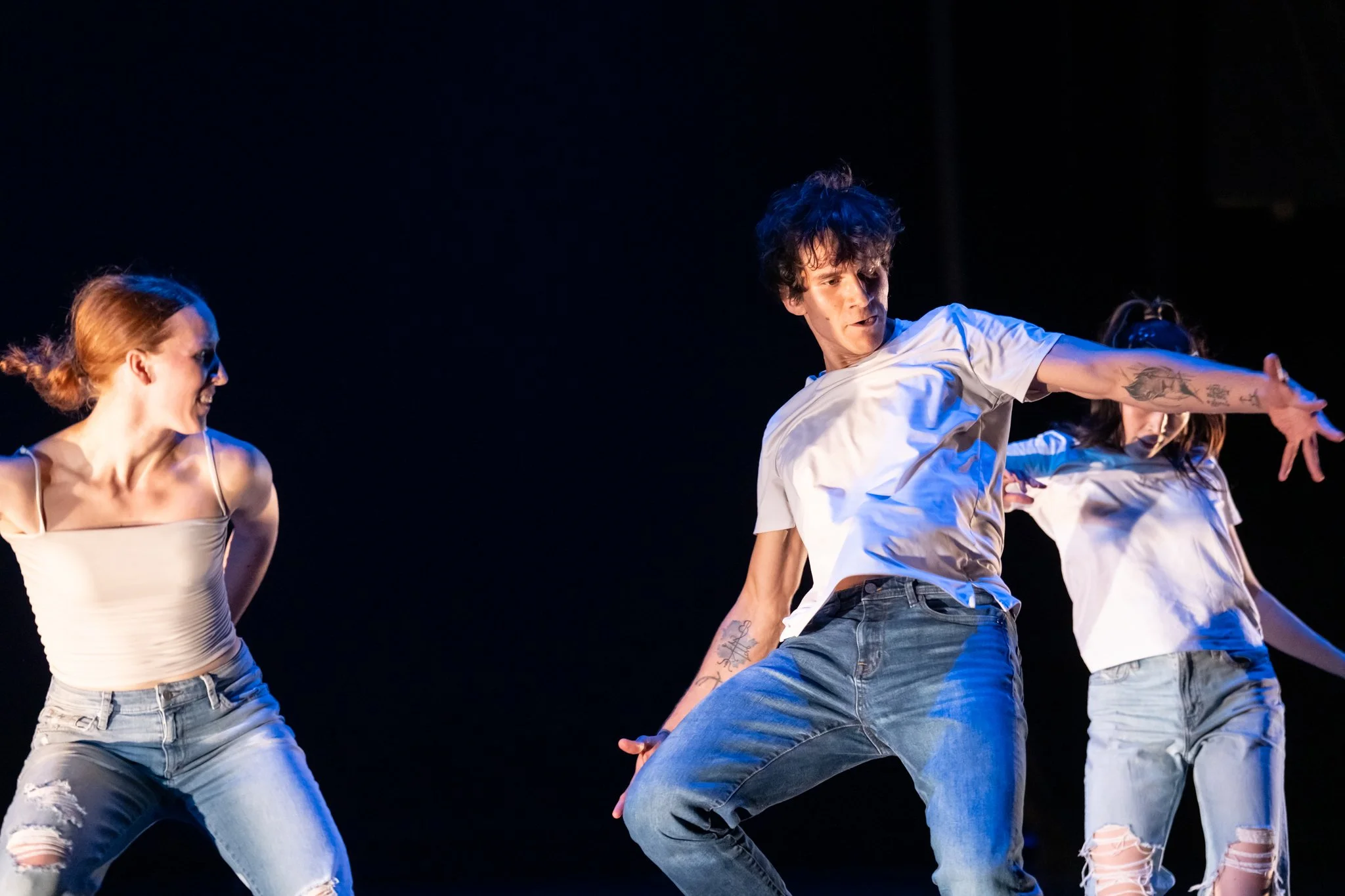
Artistic Director Meredith Sutton sat down with Wilfredo Rivera, Assistant Professor and Co-founder Artistic Director and CEO of Cerqua Rivera Dance Theatre to talk about the 2nd Annual Chicago Latinx/e Contemporary Movement Festival by Cerqua Rivera Dance Theatre as part of Season 53 of the Dance Presenting Series on October 2-3, 2026.
A continuación, se presenta una versión en español de su conversación. (Spanish language translation by: Areli Ramirez.)
Meredith: The Latinx/e experience is expansive and layered. What does it mean to you to create a movement festival that makes space for that complexity rather than defining it as a singular experience?
Wilfredo: In Chicago, creating a space in which Latinx voices have an unfiltered lens to present work, in whatever stage of the development the artist might be in, allows for a more expansive welcoming environment for different life stories and life experiences. From my perspective it's really quite simple. We're being in community with those voices. As an immigrant Latino from Honduras, I've been in so many cultural, academic, and choreographic spaces in which we divide and we box ourselves into particular levels of Latinidad. How Honduran are you? How American are you? This is about valuing artists and their work. Demystifying this hierarchy and creating a space for these artists is definitely at the heart of it.
Meredith: The festival brings together artists exploring national and multiracial identities, immigration, generational experiences, identity politics, queerness, and gender expansiveness. What have you discovered by putting these practices together in conversation with one another and what do you hope that the audience unearths as a result?
Wilfredo: The selection of artists, the pieces they are sharing, and the program order are thoughtfully curated so that all are welcome to share space together. One thing that I found really engaging and particularly rewarding from the first year was the diversity of the audience - many non-Latinx adjacent or identifying people attended. Even though there were words, text, or lyrics in Spanish, the feeling, environment, sensations, and mood united the audience. How we express ourselves as human in our bodies, gestures, posture, and in relation to each other in space give the audience plenty to hold on to through the senses so the pieces really resonate. I was personally surprised by how the audience was moved by what they had experienced. The connecting thread is the vastness of our humanity and our complex individual journeys afford us an opportunity to connect through these experiences. I hope the works ignite curiosity and discovery. Building communal bridges is so important to continue to dispel preconceived notions, especially during these times when we’re experiencing blatant persecution and a divisive environment. The aim is to center folks into the similarities of our humanity.
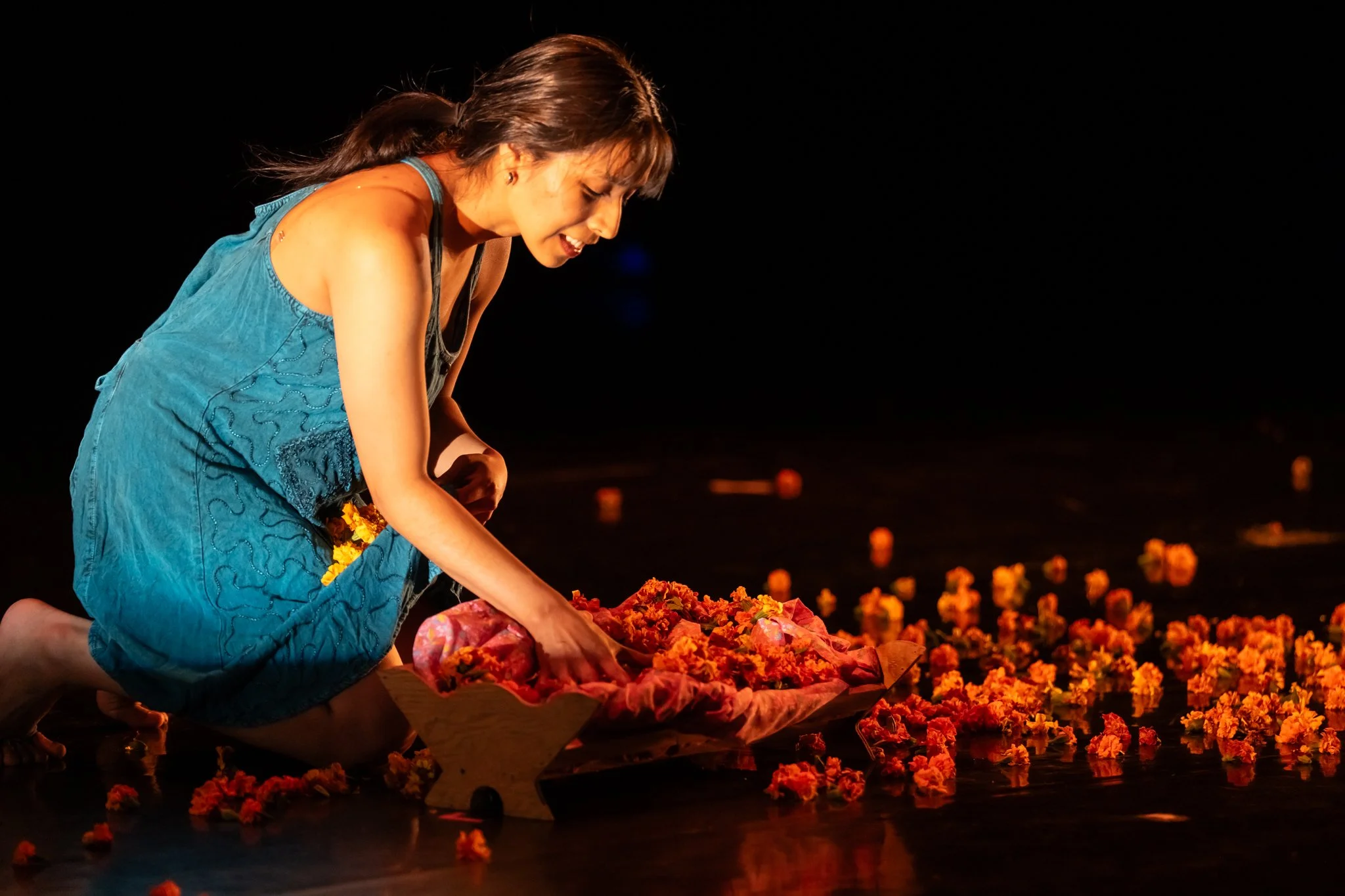
Allá, photo by: Michelle Reid.
Meredith: I'm taken with this notion of the universal connection from kinesthetic, visceral, and sensory places and I’m certain the audience is ready to have that experience. There is an expansion in programming this year with opportunities to experience performance, conversation, ways to move together, and be reflective. How has the first year of the festival shaped what we can expect in this chapter?
Wilfredo: The addition of a second day with the workshop and community dialogue and post-performance chat the first night, makes way for deeper dialogue to augment the audience’s experience. I'm delighted that we are able to bring David Herrera from Latinx Hispanic Dancers United to moderate the conversations. I'm excited about the Whacking workshop. The artist is an expert in the Whacking genre and is herself a Salvadoran Filipino artist, using Whacking for community liberation, storytelling, and an expression of her identity, so she brings such a wealth of experience and exploration. She's in that mid-career phase and is very willing to share what she's learning and discovering and the creative tools she's been using. I'm really excited to see how we can integrate our community here that are also embodying this style and how we can look at someone coming from LA, not with a sense of competition, but to network and continue to build together. I hope observers also come to the workshop and watch movement practitioners do what they love. The workshop is about opening up community while also uplifting artists at different stages of their career.
Meredith: It is very exciting to cast a wider net and to be in conversation about what this work is doing to further serve a global arts-based ecosystem. What is it that you want the audience to take away from the second year of the Chicago Latinx/e Contemporary Movement Festival intellectually, physically, emotionally, and collectively?
Wilfredo: The audience will be carried through a journey of storytelling, emotion, intricacy of movement, simplicity of gesture. You'll be surprised by things you’ve never seen before, or engage in a discipline that you never thought could be reflective of yourself or could carry a certain type of resonance with you. I think everyone will feel touched in some kind of way and feel more in community with each other. That’s really an intentional point of our inspiration: to enter as individuals in one space together and walk out of the theatre feeling more in community, with more warmth, more heart, and more spirit. There are similarities in how we articulate and view the world around us and that is especially important at these times, that there are places that we find comfort, that offer solace, a centering, calmness; and experiences in the theater can become part of that. We have a beautiful opportunity to show up for ourselves and show up for the artists.
Meredith: Thank you so much, Wilfredo! We hope this piques people’s curiosity, whether they’re returning to the festival for its second year or discovering it for the first time, and inspires them to dig in and learn more about what the festival has to offer.
La directora artística Meredith Sutton conversó con Wilfredo Rivera —profesor adjunto, cofundador, director artístico y director ejecutivo de Cerqua Rivera Dance Theatre— sobre la segunda edición anual del Chicago Latinx/e Contemporary Movement Festival, organizado por Cerqua Rivera Dance Theatre como parte de la Temporada 53 del Dance Presenting Series, el primero y el segundo de octubre de 2026.
Meredith: La experiencia latinx/e es amplia y multifacética. ¿Qué significa para ti crear un festival de movimiento que dé cabida a esa complejidad, en lugar de definirla como una experiencia única?
Wilfredo: En Chicago, crear un espacio donde las voces latinxs dispongan de una plataforma sin filtros para presentar su obra —independientemente de la etapa de desarrollo en la que se encuentre el artista— fomenta un entorno más inclusivo y acogedor para diversas historias y experiencias vitales. Desde mi punto de vista, es algo realmente sencillo: estamos construyendo una comunidad junto a estas voces. Como inmigrante latino originario de Honduras, he transitado por numerosos espacios culturales, académicos y coreográficos donde tendemos a dividirnos y encasillarnos en distintos niveles de «latinidad». ¿Qué tan hondureño eres? ¿Qué tan estadounidense eres? Aquí de lo que se trata es de valorar a los artistas y sus trabajos; desmitificar esa jerarquía y crear un espacio para ellos es, sin duda, la esencia de todo esto.
Meredith: El festival reúne a artistas que exploran identidades nacionales y multirraciales, la inmigración, las experiencias generacionales, la política de la identidad, lo queer y la diversidad de género. ¿Qué ha descubierto al poner estas prácticas en diálogo entre sí y qué espera que el público descubra como resultado?
Wilfredo: La selección de artistas, las obras que presentan y el orden del programa han sido cuidadosamente curados para que todos se sientan bienvenidos a compartir el mismo espacio. Un aspecto que me resultó realmente cautivador y especialmente gratificante desde el primer año fuenla diversidad del público: asistieron muchas personas que no se identificaban como latinas ni tenían vínculos directos con esa cultura. Aunque hubo palabras, textos o letras en español, el sentimiento, el ambiente, las sensaciones y el estado de ánimo lograron unir a la audiencia. La forma en que nos expresamos como seres humanos —a través del cuerpo, los gestos, la postura y la interacción con los demás en el espacio— ofrece al público múltiples puntos de conexión sensorial, permitiendo que las obras logren resonar en ellos. Personalmente, me sorprendió ver cómo el público se conmovió con lo que había vivido. El hilo conductor es la inmensidad de nuestra humanidad; nuestros complejos recorridos individuales nos brindan la oportunidad de conectar a través de estas experiencias. Espero que las obras despierten la curiosidad y el deseo de descubrir. Tender puentes comunitarios es fundamental para seguir derribando ideas preconcebidas, especialmente en estos tiempos marcados por una persecución flagrante y un clima de división. El objetivo es centrar la atención en aquello que compartimos como seres humanos.
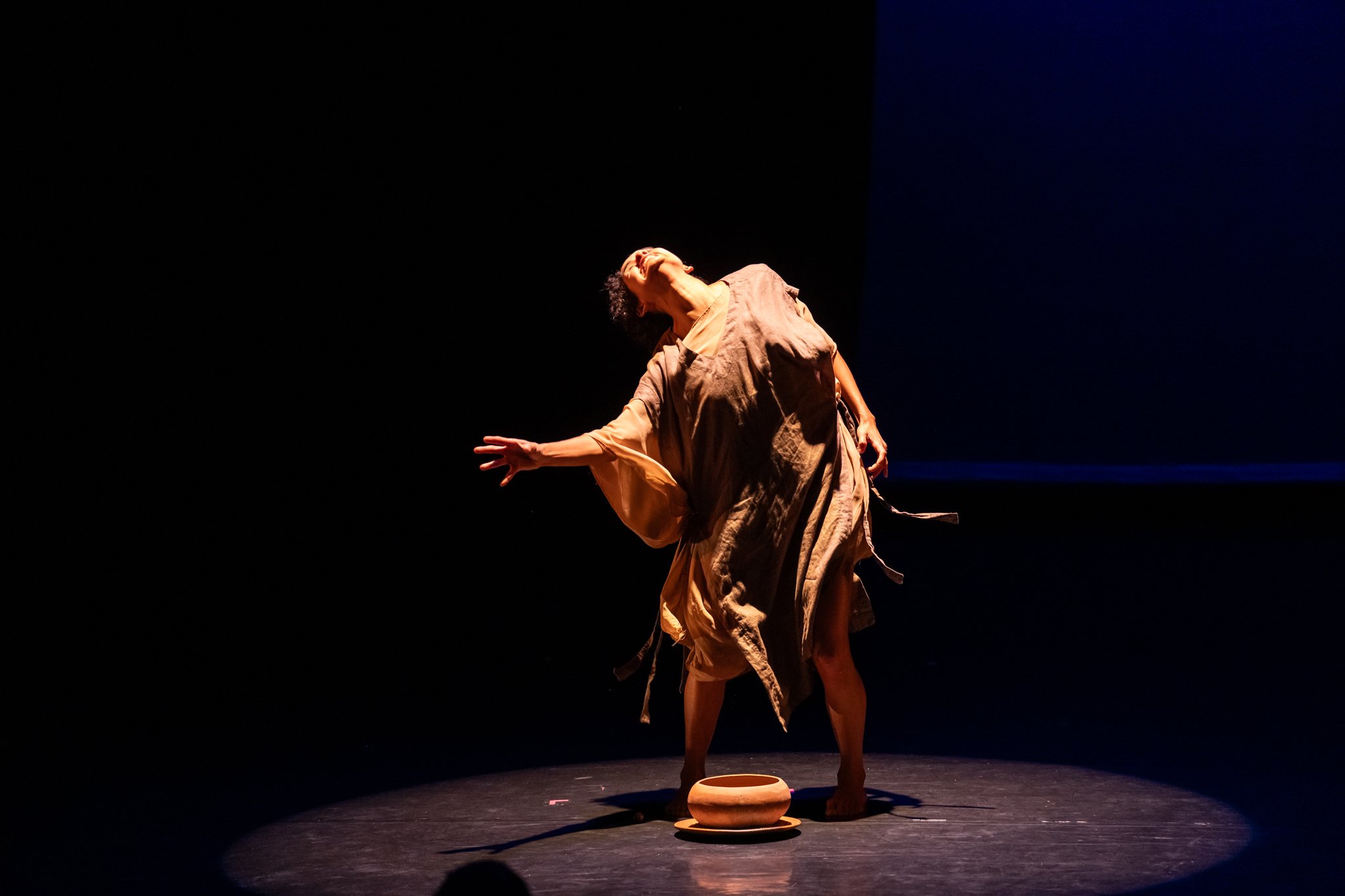
Ria, Reconciliacion Intima con el Agua
Meredith: Me atrae mucho esta idea de la conexión universal que surge de lo kinestésico, lo visceral y lo sensorial, y estoy convencido de que el público está listo para vivir esa experiencia. La programación de este año se amplía, ofreciendo oportunidades para disfrutar de espectáculos, participar en conversaciones, moverse en conjunto y propiciar la reflexión. ¿De qué manera la primera edición del festival ha moldeado lo que cabe esperar de esta nueva etapa?
Wilfredo: La incorporación de un segundo día —que incluye el taller, el diálogo comunitario y la charla posterior a la función de la noche anterior— propicia un diálogo más profundo que enriquece la experiencia del público. Me alegra enormemente poder contar con David Herrera, de *Latinx Hispanic Dancers United*, para moderar estas conversaciones. Me entusiasma especialmente el taller de *Whacking*. La artista a cargo es una experta en este género; ella misma es de ascendencia salvadoreña y filipina y utiliza el *Whacking* como medio para la liberación comunitaria, la narración de historias y la expresión de su identidad, por lo que aporta una gran riqueza de experiencia y exploración. Se encuentra en una etapa de madurez profesional y tiene una gran disposición para compartir sus aprendizajes, descubrimientos y las herramientas creativas que emplea. Me ilusiona ver cómo podemos integrar a nuestra comunidad local —que también practica este estilo— y cómo podemos recibir a alguien que viene de Los Ángeles no con un espíritu competitivo, sino con la intención de crear redes y seguir construyendo juntos. Espero que asistan observadores al taller para que logren observar cómo los bailarines se dedican a lo que aman. El objetivo del taller es abrir espacios a la comunidad y, al mismo tiempo, impulsar a los artistas que se encuentran en distintas etapas de su carrera.
Meredith: Es muy emocionante abrir nuevos horizontes y conversar sobre cómo este trabajo sigue fortaleciendo un ecosistema global enfocado en las artes. ¿Qué te gustaría que la audiencia se lleve —intelectual, física, emocional y colectivamente— del segundo año del Chicago Latinx/e Contemporary Movement Festival?
Wilfredo: El público será transportado a través de un viaje de narración, emoción, complejidad de movimientos, simplicidad de gestos. Te sorprenderán cosas que nunca antes habías visto o te involucrarás en una disciplina que nunca pensaste que podría reflejarte a ti mismo, o que podría tener cierto tipo de resonancia contigo. Creo que todos se sentirán conmovidos de alguna manera y se sentirán más en comunidad unos con otros. Ese es realmente un punto intencional de nuestra inspiración: entrar juntos como individuos en un espacio y salir del teatro sintiéndonos más en comunidad, con más calidez, más corazón y más espíritu. Hay similitudes en cómo articulamos y vemos el mundo que nos rodea, y eso es especialmente importante en estos momentos, en los que hay lugares en los que encontramos consuelo, que ofrecen consuelo, centrado, calma; y las experiencias en el teatro pueden formar parte de eso. Tenemos una hermosa oportunidad de mostrarnos a nosotros mismos y apoyar a nuestros artistas.
Meredith: ¡Muchísimas gracias, Wilfredo! Esperamos que esto despierte la curiosidad de la gente —tanto de quienes regresen al festival en su segunda edición como de quienes lo descubran por primera vez— que los inspire a profundizar y conocer más sobre lo que el festival tiene que ofrecer.
Muchas gracias a Areli Ramírez por la traducción al español.
